The short answer#
Your Day Master is strong or weak depending on three checks: is it in season, is it rooted, and is it supported? In season means your birth month is your own element. Rooted means your element hides inside the branches. Supported means other stems are on your side. Pass most of them and you lean strong; fail most and you lean weak, which describes your chart’s balance, not your luck.
Not sure what your Day Master is yet? Get your chart from the free BaZi chart calculator, then run the three checks below.
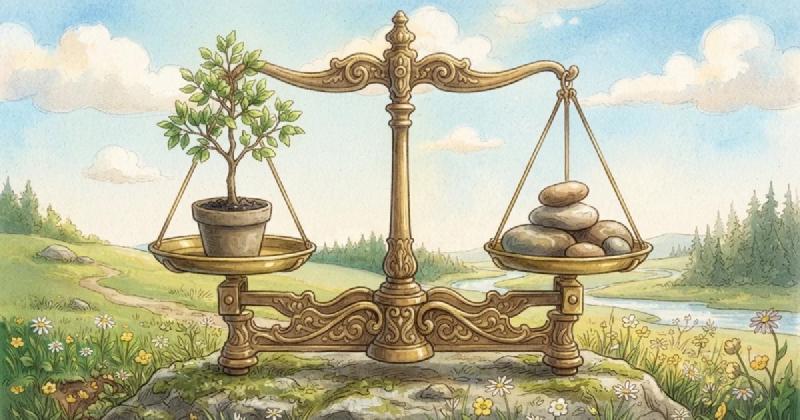
Why strength matters at all#
Every chart has energy that supports the Day Master (your own element and the element that produces it) and energy that uses it up (what you produce, what you control and what controls you). Strength is simply the balance between the two.
That balance decides the most practical question in BaZi: what helps you? A strong Day Master needs outlets; a weak one needs backup. Get it backward and every recommendation that follows is upside down. Our wiki calls it a battery: strong vs weak.
The three checks#
| Check | Chinese | The question | Weight |
|---|---|---|---|
| In season | 得令 | Is my birth month my own element? | Highest |
| Rooted | 通根 / 得地 | Does any branch hide a stem of my element? | Medium |
| Supported | 得勢 | Do the other stems include my element or my Seal element? | Lower |
Check 1: In season#
Look at the Month Branch and its main element.
- In season: the month is your own element (Wood born in a 寅 Yin or 卯 Mao month). The 辰 Chen, 戌 Xu, 丑 Chou and 未 Wei months count as Earth, and an Earth Day Master born in a 巳 Si or 午 Wu (Fire) month also counts, because Fire and Earth peak together in summer.
- Fed, but not in season: the month is the element that produces you (Wood born in a 亥 Hai or 子 Zi month, since Water feeds Wood). That is real support — count it under Check 3 — but it is not being in season.
- Out of season: the month drains you, you have to control it, or it controls you.
The month is one character, but it is the climate of the whole season, so it often outweighs two or three other characters. More in why the Month Branch is the soul of your chart.
In practice: in-season people usually have a natural “home field.” Things in their own lane come easily. Out-of-season people often say they had to build their footing on purpose.
Check 2: Rooted#
A root is a Hidden Stem of your own element inside a branch. Your own element in a branch’s main element is a strong root; in a branch’s residual element it’s a thin one. Roots in the Day and Hour Branches count more because they sit closest to you. See Hidden Stems.
In practice: roots are staying power. A rooted Day Master can take a hit and recover; an unrooted one can still shine, but needs stable ground from outside: a home base, a routine, a team.
Check 3: Supported#
Look at the other three stems. Your own element (Shoulder, Rob Wealth) and the element that feeds you (Direct Seal, Indirect Seal) are allies. But a helper with no root of its own is weak help: “allies who lend their name but no real resources.”
In practice: support shows up as the people and resources around you: siblings, friends, mentors, credentials, a safety net.
All three checks with more detail are on In season, rooted, supported.
Two real charts, same Day Master#
Both examples are 甲 Jia (Yang Wood) Day Masters, both born at a 巳 Si hour, both computed with the same engine as our calculator. The only big difference is the season.
Example A: strong — Feb 12, 1993, 10:00 a.m., New York#
| Hour | Day | Month | Year | |
|---|---|---|---|---|
| Stem | 己 Ji | 甲 Jia | 甲 Jia | 癸 Gui |
| Branch | 巳 Si | 子 Zi | 寅 Yin | 酉 You |
| Ten God | Direct Wealth / Eating God | Day Master / Direct Seal | Shoulder / Shoulder | Direct Seal / Direct Officer |
(Born a week after Start of Spring on February 4, 1993, which is why the year is already 癸酉.)
- In season: yes. 寅 Yin is early-spring Wood, with 甲 as its main element. This is Wood’s home month.
- Rooted: yes. The Month Branch 寅 holds a full 甲 root, the strongest kind, in the most important spot.
- Supported: yes. 甲 on the Month Stem (Shoulder), 癸 on the Year Stem (Direct Seal), and 子 Zi under the Day Master is more Water feeding Wood.
Verdict: strong. This chart has more than it needs, so the helpful elements are the outlets: 巳 Si’s Fire (Eating God, talent and output) and 己 Ji Earth (Direct Wealth, results and money). Classically, Jia in early spring wants 丙 Bing Fire, the sun, to warm it, and 巳 delivers exactly that. Practical read: needs real work to push against; boredom is a bigger risk than overload.
Example B: weak — June 24, 1985, 11:00 a.m., New York#
| Hour | Day | Month | Year | |
|---|---|---|---|---|
| Stem | 己 Ji | 甲 Jia | 壬 Ren | 乙 Yi |
| Branch | 巳 Si | 午 Wu | 午 Wu | 丑 Chou |
| Ten God | Direct Wealth / Eating God | Day Master / Hurting Officer | Indirect Seal / Hurting Officer | Rob Wealth / Direct Wealth |
- In season: no. 午 Wu is midsummer Fire. Wood feeds Fire, so the season drains this Day Master.
- Rooted: no. None of 丑, 午, 午 or 巳 hides any Wood.
- Supported: partly. 壬 Ren Water (Indirect Seal) feeds Wood and has a thin root in 丑’s hidden 癸. 乙 Yi (Rob Wealth) is an ally on paper, but unrooted.
Verdict: weak. Fire (Hurting Officer, Eating God) and Earth (Wealth) pull energy out of a Jia with no roots. The helpful elements are Water (Seal) first, then Wood (Peers). Classically, Jia in a Wu month needs Water urgently, and the 壬 Ren on the Month Stem is this chart’s lifeline. Practical read: a sharp, expressive, results-oriented person who does best with mentors, training and a team behind them, and who burns out fastest when going solo.
Side by side#
| Example A (1993) | Example B (1985) | |
|---|---|---|
| In season | Yes (寅, Wood) | No (午, Fire) |
| Rooted | Yes (寅) | No |
| Supported | Yes (甲, 癸, plus 子) | Partly (壬; 乙 unrooted) |
| Verdict | Strong | Weak |
| What helps | Fire, Earth (output, results) | Water, Wood (learning, allies) |
Notice that Example B isn’t so weak that it gives up completely. A chart with no help at all may be read as a Follow structure, a special case covered in What is a Follow structure?. Here, 壬 Ren still has a root, so it’s read as an ordinary weak chart.
Common myths about a weak Day Master#
| Myth | Reality |
|---|---|
| “Weak means a bad chart.” | Weak means under-supplied, not unlucky. Many successful people have weak Day Masters with strong support systems. |
| “Strong means a successful person.” | A strong chart with no outlet can feel stuck, stubborn or restless. |
| “Weak people can’t lead.” | They lead differently: by gathering resources, mentors and teams, not by carrying everything alone. |
| “More of my element always helps.” | Only for a weak chart. For a strong chart, more of the same is overload. |
| “Strength never changes.” | The natal balance is fixed, but Luck Pillars and years add or remove support, so some decades feel very different. |
Honest limits#
- Most charts are somewhere in the middle. For a near-balanced chart, seasonal balancing (too hot, too cold) often matters more than strength. See seasonal balancing.
- Combinations and clashes can shift the count. Three checks give you a reliable first pass; advanced readings adjust from there.
- Quick tools simplify. Our calculator’s quick read looks mainly at the month. Run the three checks yourself; your answer may differ, and that’s expected.
Next steps: work out your helpful element with the Useful God, practice with Lesson 13: Strength, or read the longer four-condition guide to Day Master strength. To see strength in a full reading, follow How to Read Your Own BaZi Chart.
❓ FAQ#
Q: What is a weak Day Master in BaZi?
A weak Day Master is one that gets little help from its birth month, has few or no roots in the branches, and has few allies among the stems. It means the chart has more energy draining or pressuring you than supporting you. It is a description of balance, not a judgment of luck or ability.
Q: How do I know if my Day Master is strong or weak?
Run three checks. In season: is your Month Branch your own element? Rooted: do any branches hide your element? Supported: do the other stems include your own element or your Seal element? Pass most of them and you lean strong; fail most and you lean weak.
Q: Is a weak Day Master bad?
No. Strong and weak describe how much energy you hold compared with what your chart asks you to handle, not how good your life will be. A weak Day Master does best with good resources, mentors and teams; a strong one does best with plenty of output, responsibility and challenge.
Q: What should a weak Day Master do?
Lean on the elements that support you: the Seal element (learning, mentors, credentials, rest) and your own element (peers, partners, a trusted team). Avoid carrying everything alone, and choose roles where a system backs you up.
Q: Which matters most for Day Master strength?
The birth month. Being in season usually outweighs two or three other characters, which is why classical texts say the Month Commander decides most of a chart’s strength. Roots come second, and support from the stems comes third.
👉 Find your Day Master and run the three checks with the free BaZi chart calculator